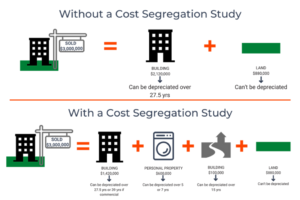

Instead of depreciating your building over 39 years (or 27.5 years for residential property), a cost segregation study breaks out eligible components into shorter useful lives, typically
5, 7, or 15 years. This allows business owners to accelerate depreciation, reduce taxable income, and improve cash flow.

Common building elements that often qualify for shorter lives include:

  • Wallcoverings
  • Carpeting / flooring
  • Specialty wiring
  • Lighting fixtures
  • Sprinkler systems
  • Certain plumbing and mechanical components

Because cost segregation studies are highly scrutinized by the IRS, and currently lack formal preparation standards, accurate documentation and engineering-level detail are essential.
Why Cost Segregation Matters: Key Benefits

  1. Accelerated Depreciation & Tax Savings

By reclassifying assets from long-term property to shorter-lived property, you can dramatically increase first-year depreciation.

The Tax Cuts and Jobs Act of 2017 (TCJA) further enhanced these savings by allowing 100% bonus depreciation for 5-, 7-, and 15-year property (subject to current phase-out rules).

  1. Improved Cash Flow

More depreciation = less taxable income.
Less taxable income = more money to reinvest in your business.

  1. Faster ROI on Building Investments

Rather than waiting nearly four decades for full depreciation, a cost segregation study allows owners to realize tax benefits immediately.

  1. Quick Process

A high-quality study typically takes 3–6 weeks, depending on building size, complexity, and documentation.

When Should a Cost Segregation Study Be Completed?

A cost segregation study is most beneficial when:

  • A new building is placed in service
  • You purchase an existing building
  • You gut and renovate an existing structure
  • You demolish and rebuild on an existing lot

Whether the property is brand new or significantly improved, a study can help front-load depreciation deductions.

What You Need for a Cost Segregation Study

To complete an accurate analysis, your CPA team will typically request:

  • AIA construction documents (most common for new builds)
  • Tax depreciation schedules (for existing buildings)
  • Total building cost
  • Blueprints, site plans, or renovation drawings
  • On-site access for a physical inspection or walk-through

Industries That Benefit Most from Cost Segregation

Cost segregation is valuable across a wide range of sectors, especially those with tenant improvements, specialized electrical needs, or frequent remodels:

  • Retail
  • Office buildings
  • Multi-family and single-family rental properties
  • Medical and dental facilities
  • Self-storage
  • Industrial, warehouse, and manufacturing properties

Cost Segregation Pricing: What Business Owners Should Expect

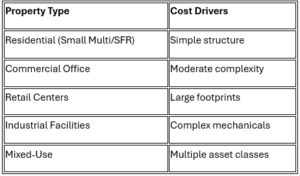
The cost of a study varies based on property complexity, size, and location.

National averages show:

Cost Segregation table.


Regional Pricing Insights:

  • West Coast & Northeast: Typically, 10–20% above national averages
  • Midwest & South (including Minnesota): Often 10–15% below national averages


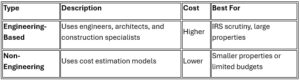
Engineering vs. Non-Engineering Studies

Cost Segregation table.

For IRS defense and maximum accuracy, an engineering-based study is strongly recommended.

Real-World Example of Cost Segregation Savings

An image that explains cost segregation savings.


Visual from madisoninvesting.com


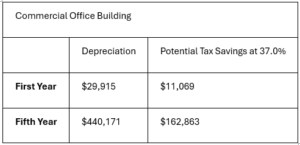
Without Cost Segregation (Straight-Line)

Without cost segregation table.

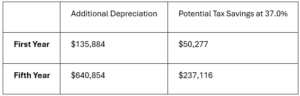
Use of a cost segregation study would have significantly enhanced his tax and cash flow position as follows:

Without Cost Segregation (Straight-Line)

Without cost segregation table.

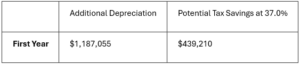
After the passage of the Tax Cuts and Jobs Act of 2017, and with the utilization of cost segregation, take a look at the difference:

With Cost Segregation (including TCJA)

With cost segregation, including TCJA table.

Over $1.1 million in additional depreciation in year one!!


Example from costsegregationirs.com

How Froehling Anderson Helps Business Owners

At Froehling Anderson, we bring decades of tax expertise to help business owners make confident, strategic decisions about their real estate investments.

Here’s how our team supports you:

  • A team of experienced partners versed in cost segregation
  • On-site property walk-throughs to identify eligible assets
  • Review of AIA documents and construction records
  • Coordination with engineers and third-party specialists
  • Customized analysis aligned with your tax strategy and long-term goals
  • Clear communication and documentation for IRS compliance

Whether you own a retail center, a medical facility, multifamily property, or an industrial plant, our Minneapolis and St. Cloud, Minnesota based CPAs help you determine if a cost segregation study is right for your business.

Is Cost Segregation Right for You? Let’s Talk.

If you’ve recently purchased, built, or renovated a commercial property, or you’re planning a major improvement, cost segregation may deliver significant tax savings.

Our team of trusted accountants is here to help you navigate your options with confidence and clarity. Connect with your relationship manager or reach out through our website!


Disclaimer: This content is for informational purposes only and does not constitute legal, tax, or audit advice. Please consult with your CPA for guidance tailored to your situation.